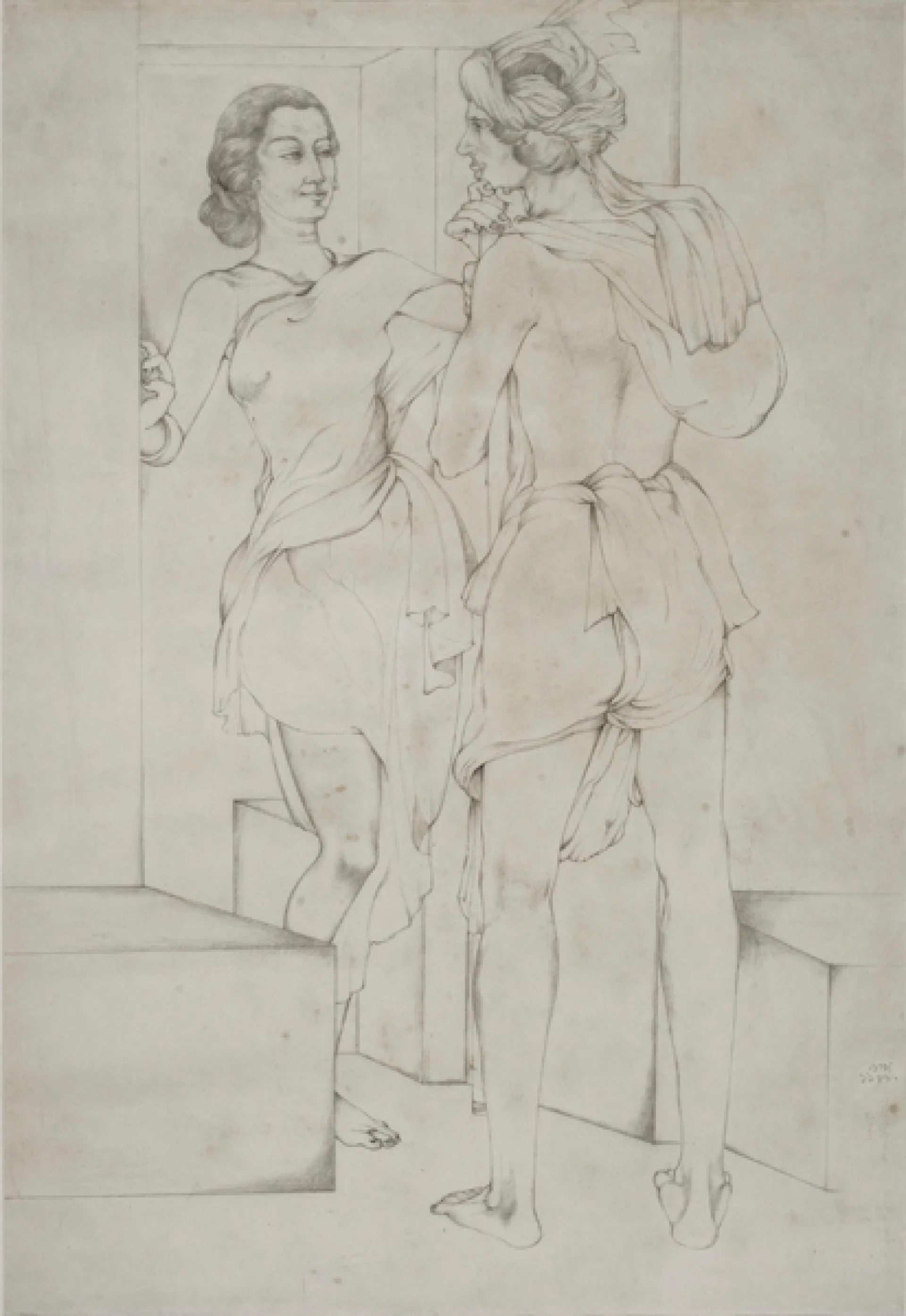
Nandalal Bose occupies a central position in the history of modern Indian art as one of the foremost disciples of Abanindranath Tagore and a key figure in the evolution of the Bengal School of Art into a broader, more inclusive modernist practice. Born in 1882 in Bihar, Bose received his early training at the Government School of Art, Calcutta, where he came under the influence of Abanindranath Tagore, whose ideas on cultural nationalism and indigenous aesthetics profoundly shaped his artistic direction.
Rejecting European academic realism, Bose developed a visual language rooted in Indian classical traditions, folk idioms, and East Asian influences, particularly Japanese wash techniques. However, unlike the earlier Bengal School, his work demonstrated a greater openness to experimentation, synthesising multiple traditions into a dynamic and evolving practice.
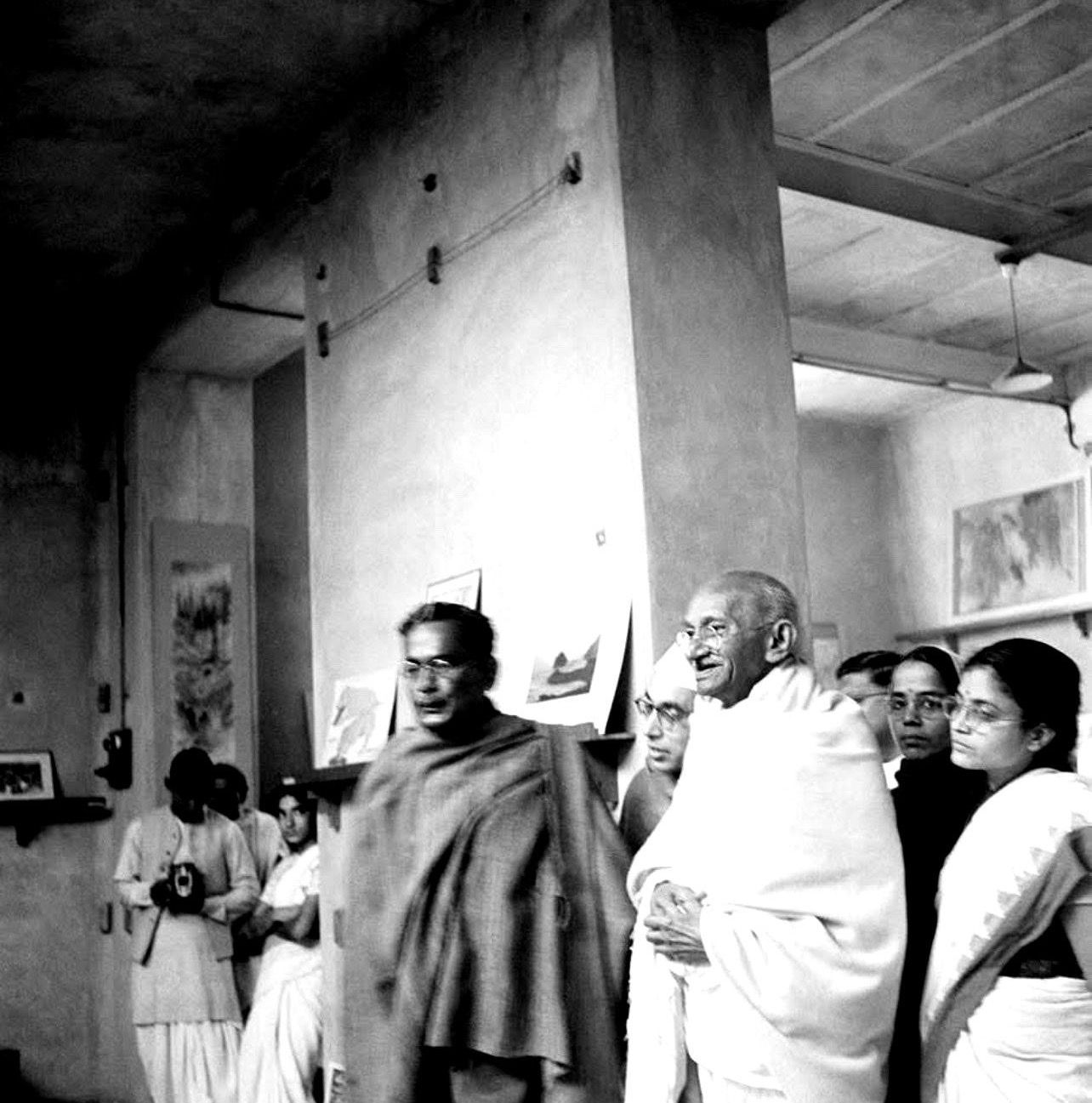
A defining phase of Bose’s career was his long association with Visva Bharati University at Santiniketan, where he became the principal of Kala Bhavana. Under his leadership, the institution emerged as one of the most important centres for modern art in India, fostering a generation of artists who would redefine Indian modernism. His pedagogical approach emphasised learning from nature, craft traditions, and lived experience, rather than rigid academic instruction.
Bose’s work spans a wide range of media, including painting, mural, printmaking, and design. His celebrated Haripura posters (1938), created for the Indian National Congress session, exemplify his ability to integrate folk aesthetics with modern graphic sensibility. He also played a significant role in visualising India’s national identity, contributing illustrations to the original manuscript of the Constitution of India.
His imagery often reflects themes drawn from Indian mythology, rural life, and nationalist ideals, rendered with clarity, rhythmic composition, and a deep sense of harmony. Unlike the more introspective modernists, Bose’s work maintains a strong connection with collective cultural experience.
Nandalal Bose received numerous honours, including the Padma Vibhushan (1954), and his works are held in major institutions such as the National Gallery of Modern Art, New Delhi.
His legacy lies not only in his artistic achievements but also in his transformative role as an educator, making him one of the most influential figures in shaping the course of twentieth-century Indian art.